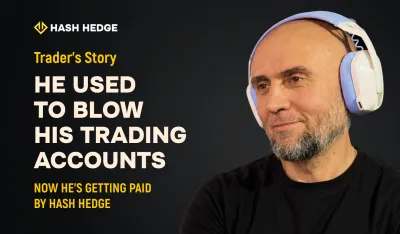
Moving and $10,000 to the Cartels
The family decided to move to America in just three days. As soon as they got in touch with the right people to organize the border crossing, they made an initial $10,000 payment for Mardon. The countdown began.
“The next day, they told me I was flying to Turkey. I rushed to say goodbye to my friends and left. I didn’t really even understand what was happening.”
Istanbul, the Buffer Zone, and a Mother’s Deportation
Mardon ended up in Istanbul alone. He stayed the night in a hotel, expecting his mother to fly in the next day. However, she was denied entry into Turkey due to a prior deportation from the country. The layout of Istanbul Airport includes a technical buffer zone – a space “between” borders where you can be without formally entering Turkey. His mother bought a new ticket and flew directly into this zone. That’s where they met up, spending the night right there in the airport. Next came a flight through Guatemala or Nicaragua (Mardon doesn’t recall the exact geography of this stage) and a brief rest by a pool overlooking the jungle.
“I thought to myself, if the whole journey is like this, I’m down. But that wasn’t the case.”
A Tire Raft, a Tarped Truck, and the Border Fence
Next was the trek through Mexico: 6-to-12-hour bus rides with almost no rest stops, spending just a couple of hours sleeping in strangers’ houses between legs of the trip. They were ordered to hide their money. Along the way, both police and cartels stopped travelers to check for valuables. If they found cash, they would hold the person until relatives paid a ransom. Mardon and his mother hid their money inside a baby powder bottle.
They crossed one of the rivers – effectively a large lake – on a raft made of truck tires and wooden planks, 5 to 6 people at a time. “Just don’t fall in,” the guides warned, without explaining why. As it turned out, the water was full of snakes and crocodiles. A separate boat ferried cars across. Closer to the border, a group of about 40 people was packed into a truck and covered with a black tarp like cargo. At one point, police with flashing lights pulled them over. The driver seemingly settled it on the spot, and they kept moving a couple of minutes later.
“They told us we were being transported along with some bad things,” Mardon recalls.
The final dash to the border was the most terrifying moment: running about a kilometer at night, past a construction site, under the searchlights and laser sights of border guards. Mardon carried two massive backpacks so his mother wouldn’t have to carry the weight.
“If you don’t cross the border in time, you get detained and sent back to your country. We had to make it.”
They crossed the actual border at a section with barbed wire covered by a blanket. An eight-year-old girl in the group fell onto the wire while crossing; a man who rushed to save her was also cut up, but both were taken for medical treatment and no one was seriously hurt. Contrary to Mardon’s fears, there was no gunfire. They crossed the border successfully.
First Months in the US: Waiter, Scooter, and Queens
After crossing, Mardon was detained and placed in a migrant hotel. Stays were limited to 2 days, but he managed to negotiate 5. His mother was held separately and for a much longer time. With no connections in the country except for one Uzbek family, Mardon asked to stay with them. Their son found him his first job – working as a waiter at Jewish weddings in New York.
Later, he worked as a food delivery courier on a scooter. The scooter belonged to someone else and broke down constantly. Once in Manhattan, the chain snapped, and Mardon had to push it on foot through the rain for 3 hours until a random bystander helped him wheel it home.
While in the detention center, his mother used other detainees to find a sponsor with a green card. He helped get her released in a couple of days, whereas others were demanding $2,500 for the same assistance. The Uzbek community also stepped up, offering his mother free food and housing.
Los Angeles: Capsule Hostel and Warehouse Work
On a friend’s advice, the family moved to Los Angeles, where there were more jobs. They arrived with just $500 in their pockets. A standard temporary homeless shelter didn’t appeal to them based on descriptions of the conditions, but a capsule mini-hostel (essentially bunks built into the wall) cost $650 a month per person. The owners, who were originally from Kazakhstan, made an exception: his mother cleaned the hostel to cover rent, and Mardon promised to pay the rest as soon as he started earning.
They found their first job through Facebook and Telegram groups for migrants: packing goods at a warehouse. While there, he was offered a chance to make quick cash through insurance fraud – intentionally getting into a car accident for $3,000 from the organizers. He declined after learning it would spike his own insurance rates. He had to leave that job because the law required workers to be over 21, and Mardon was only 19 at the time. Instead, he went to hand out advertising flyers door-to-door in Santa Monica. A tracking app monitored his movement and issued a $100 fine for stopping. He walked 40 to 50 kilometers a day for $680 a week.
“The first few weeks were incredibly brutal. Then my body adapted, and I even started going to the gym.”
From Binary Options to Trading Mentor
Mardon first encountered trading back in Uzbekistan when he was 13. He deposited about $50 in savings into a binary options platform, intending to spend the profits on in-game purchases. He blew the money quickly and forgot about it for years. Once in the US, he remembered the concept and returned to the same platform. He started learning from YouTube videos and traded 5-second candles. He turned a $100 deposit into $700, but immediately fell into a state he describes as “gambling addiction”: “I tried to win back my money after the first losses. The stakes grew, and I ended up blowing the entire deposit.”
The turning point was another YouTube channel. The creator warned that 1-minute and 5-second charts aren’t trading – they are roulette. Trading needs to happen on timeframes ranging from 15 minutes to several hours. Mardon adopted this approach, and his trading results became more stable.
He learned about prop trading from a video by an Uzbek trader who had lost $700,000 on an exchange. Since then, that trader publicly advises: “If you can’t manage capital on a prop account, you won’t be able to manage your own.” That thought stuck with him.
How Mardon Found Trust in Hash Hedge
Initially, Mardon had never heard of Hash Hedge. To verify the platform, he joined a Telegram community for Uzbek traders, found a thread with verified payouts, and personally messaged almost everyone who had posted there.
“Everyone I wrote to confirmed that payouts from Hash Hedge arrive consistently, and they showed me their payout certificates.”
The First Two Challenges
Mardon blew his first $10,000 challenge almost immediately. He entered a trade with massive leverage without a concrete strategy. He approached the second $10,000 challenge with more discipline. Bitcoin was trading around $59,000 at the time and was on the verge of a reversal. Mardon passed all stages of the challenge, secured a Funded account, and initially didn’t trade on it at all to play it safe.
Three $100,000 Funded Accounts & Why They Blew Up
Securing New Challenges
Later, Hash Hedge launched a promotion featuring a free challenge, and Mardon also purchased a $100,000 challenge. He secured a Funded account across all of them.
“I realized that this was real money now, caught a gambling bug, and blew all the accounts one after another.”
Mardon lost one of these accounts when BTC plunged from $70,000 to $60,000 due to geopolitical tensions between the US and Iran. He couldn’t close his trades across all accounts fast enough; the daily loss limit was breached, and the positions liquidated automatically. Following this loss, he lost interest: “I had thoughts like, ‘Why am I even doing this trading thing, nothing is working out.’”
Total Account Count
In total, Mardon took 11 challenges: seven $100,000 accounts and four $10,000 accounts. Six reached Funded status:
— Three $100,000 accounts
— Three $10,000 accounts
Four $100,000 accounts and one $10,000 account failed to make it past the first stage.
What Kept Him from Quitting and Recouped the Losses
Mardon views the money spent on failed challenges as an “investment in himself.” “Ultimately, I recovered the entire amount in about 2 months of consistent profits.” Shifting from emotional trading to operating “by the data” turned things around. He began using a predetermined system (liquidity zones, support and resistance levels, and a minimum of three confirmations before entering) rather than relying on intuition. Mardon specifically highlights the platform itself: the fixed loss limits kept his losses from spiraling out of control.
“If there were no loss limits, I would have lost more. It was Hash Hedge’s limits that saved me.”
Current Earnings
$10K–$15K a Month Trading
Today, Mardon earns $10,000 to $15,000 a month (making around $8,000 in a “bad” month). He strictly prefers trading on Funded accounts with a profit split rather than risking his personal capital. Mardon primarily trades altcoins but tries to keep an eye on all assets available on Hash Hedge. Analysis and trading take up 3 to 8 hours of his day.
Example of a payout on the Hash Hedge platform on a $10K account

How Mardon Fights Gambling Urges
He hasn’t completely eliminated the urge to gamble, but Mardon found a way to keep it out of his trading: whenever he feels tempted to take an uncalculated risk, he plays poker or chess instead of opening a new trade.
“Chess forces the brain to stick to a strategy. Poker helps too – it’s essentially the same risk management, just not on an exchange.”
“I’d rather miss a trade, even if the market is skyrocketing and everyone is screaming about a coin in the news. If I don’t have a technical setup, I won’t enter.”
He shares his main piece of advice for beginners: “Buy a prop challenge at Hash Hedge; they don’t have the hidden restrictions that others do. Trade based on statistics, not guesswork, and keep a trading journal. And don’t expect to make it rich in a week – that’s not how it works over the long haul.”
Key Takeaways
- Discipline You Can’t Buy. Mardon lost three $100,000 Funded accounts not because of a lack of skill, but due to a psychological trap: “This is real money now.” Moving from the challenge phase to a live funded account proved harder than the test itself.
- Platform Limits as an External Brake. Where internal discipline falls short, strict software saves the day. The daily loss limit set by the platform physically halts trading before losses become catastrophic.
- Trust via Facts, Not Ads. Before trusting Hash Hedge, Mardon personally messaged dozens of real traders with verified payouts. Only after that did he commit to his first challenge.
- Blown Accounts Are Part of the Journey. Seven failed accounts were completely offset by 2 months of stable trading. This happened as soon as Mardon replaced emotions with systematic, data-driven execution.
Hash Hedge is a prop trading firm that provides traders with capital to manage after they pass a challenge. Read more about the terms and rules on the official website: hashhedge.com