What liquidity in trading means and why it drives price
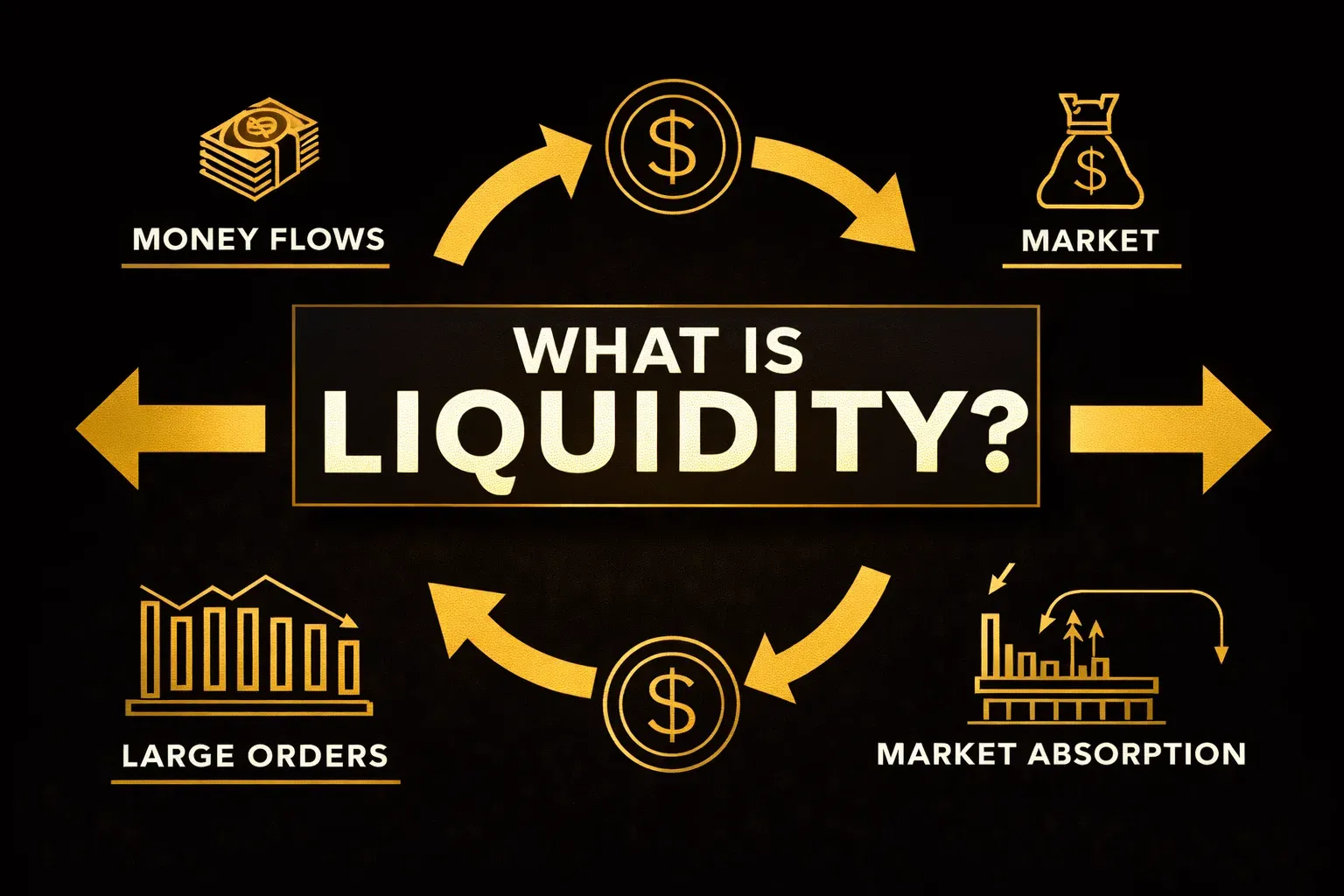
In financial markets, liquidity refers to the volume of available orders that can be executed at or near the current price. This includes limit orders, market orders, stop-losses, and take-profits. The more orders are concentrated in one area, the easier it is for large participants to enter or exit positions without significant slippage.
That’s why liquidity and price are always connected. The market moves toward areas with volume because that’s where large orders can be filled. Market liquidity most often builds up above local highs and below local lows, around obvious support and resistance levels, and inside trading ranges and consolidation zones. These areas are known as liquidity zones. They don’t form randomly, they are a direct result of how retail traders use the same patterns and approaches.
What liquidity sweep means and how liquidity grab works
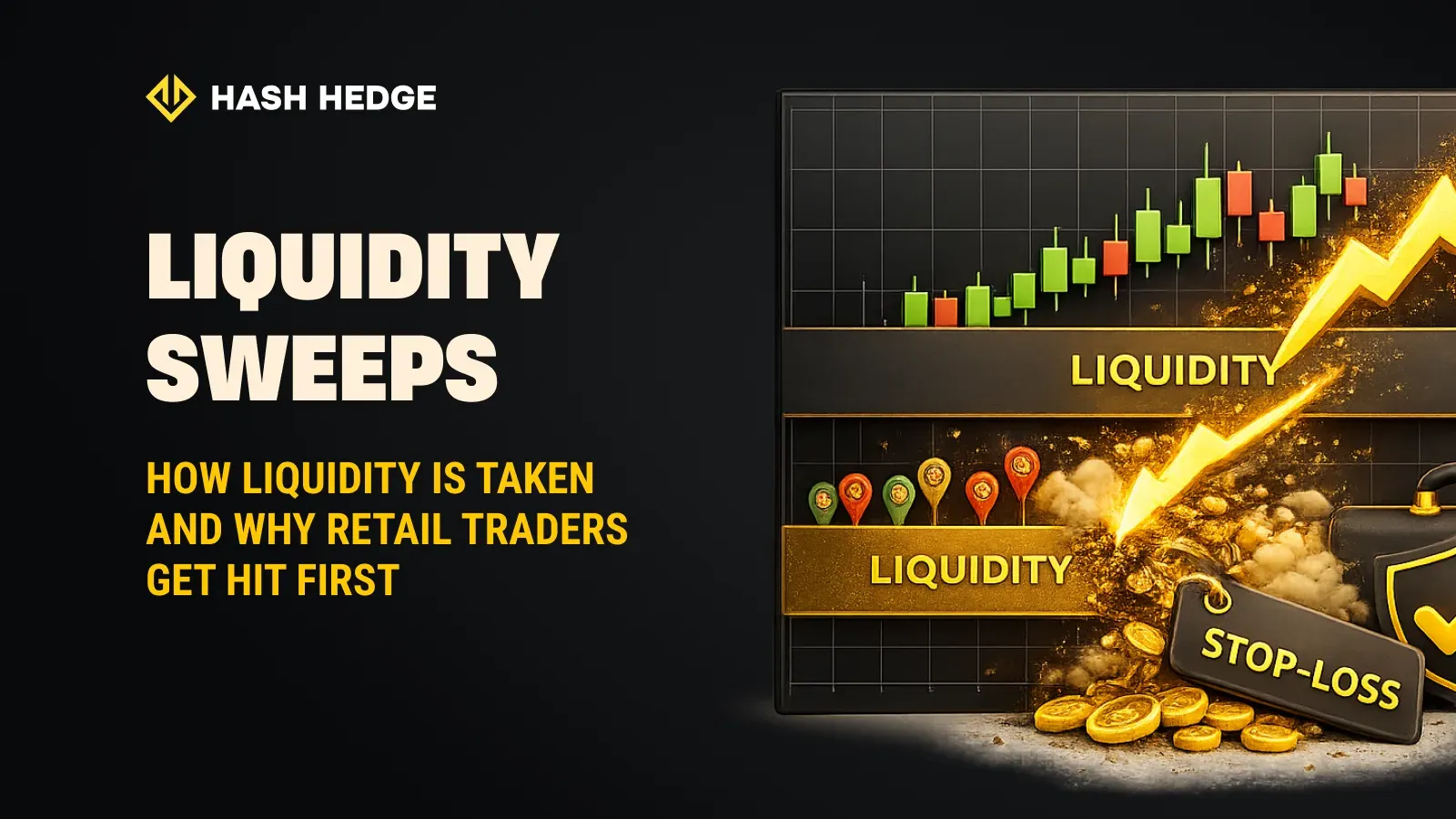
A liquidity sweep is a price move toward a cluster of orders with the purpose of executing them. In practice, it’s a liquidity grab. Price moves to where stop-losses and pending orders are concentrated, triggers them, and only after that continues in a new direction.
From a market structure perspective, this is a normal volume redistribution process. That’s why liquidity sweeps often come before an impulse, a reversal, or a breakout from a range. On the chart, liquidity sweeps usually look like a sharp spike through a level, a quick move outside the range, and a return back into structure. For unprepared traders, this looks like a false breakout. For those who understand how market liquidity works, it’s part of the market’s logic.
How liquidity sweep looks in real trading
A typical scenario starts when price approaches a level that most participants consider significant. Some traders open positions on the breakout, while others place stop-losses behind the level. As a result, a dense cluster of orders forms beyond that area.
When price reaches that zone, a sharp move follows. Stop-losses are triggered, pending orders are filled, and the necessary volume is created for large players to enter. After that, the market often returns to the range and continues moving without pressure from retail positions.
Within Smart Money Concepts, these moves are seen as preparation for the main impulse. In a broader sense, this is part of market manipulation mechanics based on predictable crowd behavior.
Why retail traders are usually the source of liquidity
Retail behavior is highly standardized. Stop-losses are placed behind obvious levels, entries are taken on breakouts without confirmation, and decisions are often driven by emotion and fear of missing the move. That’s why retail behavior creates the most accessible and dense liquidity zones.
This is not about the market targeting anyone. It’s about order structure. As a result, stop hunts, stop runs, and stop hunting mostly happen at the expense of retail positions. For the market, this is the simplest and most available source of volume.
Common scenarios of stop hunts and false breakouts
Most often, liquidity sweeps occur during level breakouts, on news-driven impulses, or after long periods of consolidation. Price moves outside the range, forms a false breakout, collects orders, and returns back. In other cases, a sudden spike in volatility triggers mass stop-losses, after which the market stabilizes or changes direction.
Sometimes the market compresses toward a level for a long time, creating the impression of accumulation before trend continuation. When the breakout finally happens, it’s actually a liquidity grab, not trend development. In all of these scenarios, the logic is the same: the market uses clustered orders to build the volume it needs.
How to factor liquidity sweeps into your trading
It’s important to understand that a liquidity sweep is not a trade signal. It’s a context element. Its purpose is to show where large participants are interested and which areas have already been used.
In practice, this means that entering on a breakout without confirmation requires extra caution, and after a stop run, it often makes sense to wait for market reaction instead of chasing price. Market structure and market context matter more than a single candle. In many cases, the most reliable entries appear only after the liquidity grab has already happened.
Why liquidity matters even more in crypto prop trading
Traders working through a prop firm for crypto traders and trading with company capital have to pay much more attention to entry quality and market structure. In crypto prop trading, impulsive decisions quickly lead to rule violations and drawdowns.
When a trader aims to get a funded trading account and trade within a crypto prop firm, they must consider where liquidity is, which zones have already been used, and where the market may look for the next volume. This turns work with liquidity zones from theory into a practical necessity.
Common mistakes when working with liquidity
Even when traders understand what liquidity in trading is, many still repeat the same mistakes.
- Entering right after a level break without context. The breakout is seen as the start of a move, but from a structure perspective, it is often just a liquidity sweep, not trend formation.
- Ignoring higher timeframes. A trader focuses on a local impulse without seeing that on a higher timeframe price may be inside a range or approaching an area where liquidity zones are concentrated. As a result, the entry is taken exactly where the market is looking for volume.
- Overvaluing a single candle or volume spike. A sharp impulse, long wick, or strong volume is treated as confirmation, while in reality it may simply be a stop hunt or preparation for a reversal.
- Entering without confirmation after an impulse. The attempt not to miss the move leads to entries right when the market is finishing the liquidity grab.
- Emotional decisions under pressure. Fear, greed, and the need to be in a position create classic retail trader behavior, making trades predictable and vulnerable to stop runs.
Together, these mistakes cause traders to repeatedly open positions in areas where the market is collecting liquidity, not starting directional movement.
What changes when you factor in liquidity in crypto trading
When a trader starts consistently factoring in liquidity in crypto trading, the entire approach to analysis changes. The focus shifts from individual patterns and signals to market structure and order distribution.
The trader begins paying attention to liquidity zones, which levels have already been used, where liquidity grabs have occurred, and which areas remain untouched. This helps explain why price slows down, why sharp impulses appear, and why movement often starts only after a liquidity sweep.
Working with liquidity in crypto trading also reduces impulsive entries. Instead of chasing every breakout, the trader waits for market reaction after the stop run, evaluates whether price holds beyond the level, and whether structure is forming for continuation. This improves entry quality and reduces the number of trades taken without clear direction.
Over time, liquidity analysis stops being a separate technique and becomes the foundation for reading the market. The trader sees not only the result in candles but the process, where and why the market is looking for volume. This makes decisions more balanced and systematic.
Final Thoughts
A liquidity sweep is part of normal market mechanics. The market takes liquidity because that’s where volume can be executed.
A trader who understands how the market hunts stops and why stops are taken before real movement stops seeing these moves as chaos and starts reading them as structure. This doesn’t guarantee profit, but it significantly improves analysis quality and reduces impulsive decisions.
Understanding liquidity structure only makes sense when you have capital to work with, which is why more and more traders choose to trade with up to $100,000 in company capital through Hash Hedge.